How to Tell If Your Chimney Is Unsafe
Discover how to spot chimney safety problems early, from loose bricks and damaged flashing to unusual odors, rust, animal activity, and poor ventilation.




Based on 500+ Reviews

Proudly American
Owned & Operated

A chimney plays an important role in safely removing smoke, gases, and combustion byproducts from a fireplace. However, like any part of a home, a chimney can develop problems over time due to weather exposure, moisture, aging materials, and lack of maintenance. If the chimney includes a mechanical ventilation system, chimney fan repair may be needed when the fan develops operational or performance issues.
An unsafe chimney may create risks such as smoke problems, water damage, structural failure, or improper ventilation. Learning how to identify warning signs can help homeowners address issues before they become serious.
A chimney may require inspection or repair if you notice:
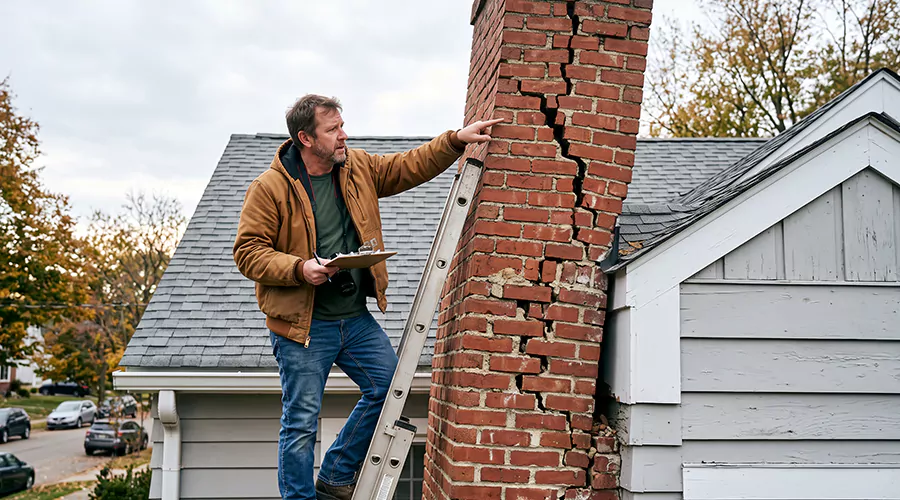
Cracks are one of the most common signs of chimney damage.
Cracks may appear in:
Small cracks can allow water to enter and worsen over time.
Larger cracks may indicate structural problems that affect chimney stability.
A chimney that is leaning is a serious warning sign.
Possible causes include:
A leaning chimney may become unstable and should be inspected promptly.
Bricks provide structural support for masonry chimneys.
Warning signs include:
Damaged masonry can allow water intrusion and weaken the chimney structure.
Water stains near the fireplace may indicate chimney leaks. If the damage has affected the fireplace structure, a fireplace rebuild may be necessary to restore its condition and safe operation.
Possible causes include:
Water damage can lead to:
The chimney crown protects the top of the chimney from water.
A damaged crown may have:
A cracked crown can allow water to enter the chimney structure and cause long-term damage.
A chimney cap helps prevent:
A missing or damaged chimney cap can allow unwanted materials into the chimney and contribute to damage.
A safe chimney should move smoke outside efficiently.
Smoke coming back into the room may indicate:
Smoke problems should not be ignored because they may indicate a chimney performance issue.
Persistent fireplace odors may indicate problems such as:
A strong odor, especially when the fireplace is not being used, may require inspection.
The chimney liner protects the chimney structure from heat and combustion gases.
A damaged liner can lead to:
Liner problems are often difficult to identify without professional inspection.
Wood-burning fireplaces produce creosote as smoke deposits collect inside the chimney.
Heavy creosote buildup can:
Regular chimney cleaning helps control buildup.
Rust may indicate moisture problems.
Check for rust on:
Rust can weaken components and may signal water entering the chimney system.
Flashing creates a waterproof barrier between the chimney and roof.
Damaged flashing may cause:
Signs include:
Animals can enter chimneys without proper protection.
Signs include:
Animals can block airflow and damage chimney components.
Homeowners can perform a basic visual check.
Look for:
Inside the fireplace, check for:
However, many chimney problems are hidden inside the flue and require professional evaluation.
Using a chimney with serious damage can create problems such as:
If there are visible signs of damage, it is best to have the chimney inspected before continued use.
Regular maintenance can help protect the chimney.
Helpful steps include:
Early repairs can prevent more expensive damage.
A professional inspection is recommended when:
A professional can evaluate the chimney structure, liner, and ventilation system.
An unsafe chimney may show signs such as cracks, leaning masonry, water damage, loose bricks, smoke problems, damaged liners, or excessive creosote buildup.
Many chimney problems develop slowly, making regular inspections important. Identifying warning signs early and completing necessary repairs can help protect the chimney structure, improve fireplace performance, and maintain a safer home environment.
Warning signs include cracks, leaning, loose bricks, smoke problems, water leaks, and damaged chimney components.
Yes. Cracks can allow water entry and may indicate structural weakness.
It is best to have significant chimney damage inspected before continued use.
Leaning, large cracks, falling masonry, and structural movement are serious warning signs.
Regular inspections help identify safety issues before they become major problems.
Yes. Cleaning, inspections, waterproofing, and timely repairs help maintain chimney safety.
Discover how to spot chimney safety problems early, from loose bricks and damaged flashing to unusual odors, rust, animal activity, and poor ventilation.
